Meeting Rooms for Growing Businesses: Why Professional Space Matters More Than You Think
There is a moment in every growing business when the conference call stops being enough. A client wants to see your team in person. A potential investor asks for a deck presentation. Your co-founders need a whiteboard session that cannot happen over Zoom. And suddenly, you are booking a hotel conference room, or worse, trying to host a professional meeting at a cafe table meant for two.
This is the inflection point where the meeting room stops being a luxury and starts being infrastructure.
For businesses in Patna and across Bihar that are scaling past the startup phase, the question is no longer whether you need a professional meeting space. It is how often you will use it, what it actually costs to improvise, and what you should demand from the space when you find one.
The Impression Your Meeting Room Makes on Clients
Let us start with the thing nobody wants to say out loud: clients judge you by the room you put them in.
A 2024 study by Harvard Business Review found that physical environment significantly influences perceptions of professionalism, competence, and trustworthiness. This is not about luxury for its own sake. It is about signaling that you take the meeting seriously.
Consider two scenarios. In the first, you meet a prospective client at a noisy restaurant. Your laptop is propped against a water glass. The WiFi drops during your screen share. You are competing with the waiter refilling chai for the table next to you.
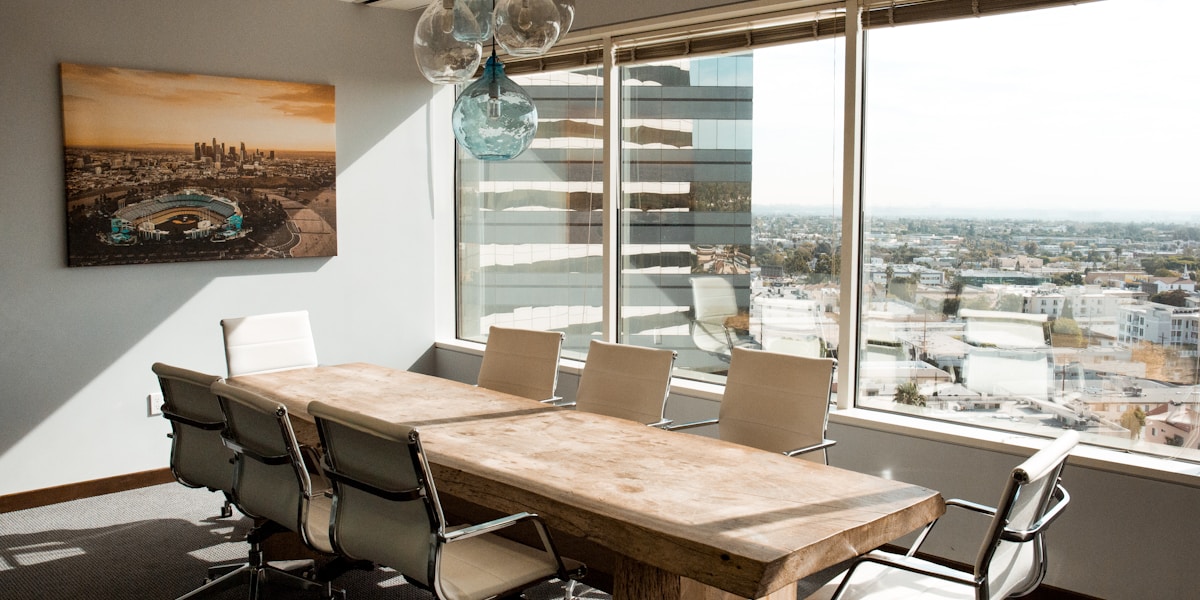
In the second, you walk into a clean, air-conditioned meeting room. There is a large display for your presentation. The seating is comfortable. The internet is stable. The room is quiet. Your client can focus entirely on what you are saying.
The content of your pitch might be identical in both scenarios. But the second one communicates something the first cannot: this person has their act together.
For businesses in Patna that are competing for contracts from companies in Delhi, Bangalore, or Mumbai, this impression gap is real. A professional meeting room is not vanity. It is a closing tool.
The Real Cost of Booking vs. Maintaining Your Own Meeting Room
Here is where the math gets interesting.
If you are a growing business, you might need a meeting room anywhere from 4 to 12 times per month. Let us look at the options:
Hotel conference rooms in Patna typically run Rs. 3,000 to Rs. 8,000 per hour, with a minimum booking of 2-4 hours. That is Rs. 6,000 to Rs. 32,000 per meeting. Even at the low end, if you meet twice a week, you are spending Rs. 48,000 per month on meeting space alone. Restaurant private dining rooms are cheaper but come with noise, limited technology, and the implicit pressure to order food. They work for casual catchups but fall apart for serious presentations. Your own leased office with a dedicated meeting room sounds ideal until you factor in the cost. In Patna, a commercial space large enough to include a proper meeting room on Bailey Road or Boring Road will cost Rs. 40,000 to Rs. 80,000 per month in rent, plus electricity, maintenance, furniture, and the opportunity cost of space that sits empty most of the time. A coworking meeting room membership at a space like Drowsy Monks starts at Rs. 1,200 per day for a 4-person room, with hourly options available. A dedicated desk plan includes meeting room hours as part of the package. For a business that needs 20-30 hours of meeting room time per month, the coworking model often comes in at Rs. 8,000-15,000 per month — a fraction of the alternatives.The break-even point is stark. If you need a meeting room more than twice a month, maintaining your own dedicated space rarely makes financial sense unless you are already leasing a full office.
Technology and Amenities That Actually Matter
Not all meeting rooms are created equal. When you are evaluating options, here is what genuinely affects the quality of your meetings:
Display and screen sharing. A large, reliable display (not a projector that takes three minutes to warm up) is non-negotiable. Your clients and team should be able to connect their laptops seamlessly, whether they use HDMI, USB-C, or wireless casting. At Drowsy Monks, every meeting room comes with an LED display because we have seen too many presentations die at the hands of a faulty projector. Internet stability. This sounds basic, but it is the single most common failure point. A meeting room is only as good as its WiFi. If your video call freezes during a client demo, no amount of comfortable chairs will save the moment. Look for spaces with dedicated bandwidth, not shared connections that slow down when the coworking floor gets busy. Acoustics and soundproofing. A meeting room that sounds like the open workspace outside is not a meeting room. It is a glass box with false promises. Proper soundproofing means your client pitch does not compete with someone else's sales call. Air conditioning. This is Patna. From April through September, the temperature regularly crosses 35 degrees Celsius. A meeting room without reliable centralized air conditioning is not a professional space. It is a test of endurance. Whiteboard or writing surface. Some of the best business decisions happen when someone stands up and starts sketching. A whiteboard or glass writing wall is not a nice-to-have. It is where ideas become plans. Power outlets at the table. This sounds trivial until you are on minute 45 of a critical meeting and your laptop is at 8%. Accessible power outlets are a sign that the space was designed for actual work, not just for looking good in photos.How Often Growing Businesses Actually Need Meeting Rooms
The honest answer: more often than they expect.
When businesses first consider coworking, they often think of meeting rooms as an occasional need. Maybe once a month for a board meeting or a client visit. But once you start tracking actual usage, the pattern looks different:
- Client meetings: 4-8 per month for a business actively selling
- Team syncs: 2-4 per month, especially if your team is partially remote
- Interviews: 2-6 per month during hiring phases
- Vendor and partner discussions: 2-4 per month
- Training or workshops: 1-2 per month
That is 11-24 meeting room sessions per month for a typical growing business. At hotel rates, that is financially devastating. At coworking rates, it is manageable and predictable.
The businesses that plan for this usage from the start are the ones that scale smoothly. The ones that do not plan for it end up scrambling for space at the worst possible moments.
Flexible Booking Options: What to Look For
The best meeting room setups offer flexibility that matches the unpredictable rhythm of a growing business. Here is what separates a good booking system from a frustrating one:
Hourly booking. You should not have to pay for a full day when you need 90 minutes. Look for spaces that offer hourly or half-day rates. Same-day availability. Business does not always give you a week's notice. A good coworking space keeps some meeting rooms available for same-day or next-day booking. Scalable room sizes. Sometimes you need a 4-person room for a client call. Sometimes you need a 9-person conference cabin for a team workshop. Having access to different room sizes in the same location means you are never overpaying for space you do not need. Inclusive plans. Some coworking memberships bundle meeting room hours into the monthly price. At Drowsy Monks, our Dedicated Desk plan includes 5 hours of meeting room access per month, which covers the baseline needs of most small teams. No long-term lock-in. If you are booking meeting rooms on a pay-per-use basis, you should not be signing a 12-month contract. The whole point of flexibility is that you can scale up or down as your needs change.What to Look for in a Meeting Room: A Checklist
Before you book, run through this checklist:
- [ ] Reliable, high-speed WiFi (ask for a speed test, not just promises)
- [ ] LED display or projector with multiple input options
- [ ] Centralized air conditioning
- [ ] Soundproofing or at least solid walls (not glass partitions)
- [ ] Comfortable seating for the full capacity (not "fits 4 if they are friendly")
- [ ] Whiteboard or writing surface
- [ ] Accessible power outlets
- [ ] Tea/coffee availability (your clients will appreciate it)
- [ ] Clean, professional appearance
- [ ] Easy booking and cancellation policy
- [ ] Parking or easy accessibility for guests
If a space checks fewer than 8 of these 11 items, keep looking.
Real Scenarios: How Patna Businesses Use Meeting Rooms
A digital marketing agency with a team of 6 uses a coworking meeting room for client presentations twice a week. They previously booked hotel rooms at Rs. 5,000 per session. Their monthly meeting room cost dropped from Rs. 40,000 to Rs. 9,600 by switching to a coworking space. The client experience improved because the space was consistent and professional. A SaaS startup preparing for a seed round used a conference cabin for investor pitch rehearsals over three weeks. The 9-seater cabin gave them room to simulate a board meeting setup. The total cost was a fraction of what a comparable hotel space would have charged, and the centralized AC meant they could rehearse for hours without discomfort during Patna's summer. An e-commerce brand conducts all vendor negotiations from a coworking meeting room. The professional setting shifts the power dynamic — vendors take the meeting more seriously when the environment signals an established business. The brand owner estimates this alone has improved their negotiation outcomes by 15-20%. A CA firm uses meeting rooms during tax season (March-April) for client consultations, then scales back to day passes during quieter months. The flexibility to ramp up and down without a fixed office lease is what makes the model work for their seasonal business.The Bottom Line
A meeting room is not an expense. It is a tool that directly affects your ability to win clients, run effective teams, and project the professional image your business needs to grow.
The question for growing businesses in Patna is not whether to invest in meeting space. It is whether to invest in a fixed, expensive, underutilized room of your own — or to access professional meeting spaces on demand, at a fraction of the cost, with the flexibility to scale as your business evolves.
For most growing businesses, the answer is obvious once you do the math.
If you are exploring workspace options that include professional meeting rooms, our meeting rooms page has details on availability and pricing. You might also find our article on how to choose the right workspace useful for evaluating your overall workspace strategy.
Frequently Asked Questions
How much does it cost to book a meeting room in Patna?
Meeting room costs in Patna vary widely. Hotel conference rooms typically charge Rs. 3,000-8,000 per hour with minimum booking requirements. Coworking meeting rooms, like those at Drowsy Monks, start at Rs. 1,200 per day for a 4-person room, with hourly rates available. For businesses that need meeting space regularly, coworking options are significantly more cost-effective.
What size meeting room do I need for client presentations?
For 1-4 person client meetings, a standard 4-person meeting room is sufficient. For team workshops, board meetings, or presentations with larger groups, a 9-person conference cabin gives you more space and a more professional setup. Consider the largest group you typically host and choose a room that accommodates them comfortably with space for a display and movement.
Can I book a meeting room for just an hour?
Yes, many coworking spaces including Drowsy Monks offer hourly booking options for meeting rooms. This is ideal for businesses that need occasional access without committing to full-day rates. Hourly booking gives you the flexibility to use professional space only when you actually need it.
Do coworking meeting rooms come with presentation equipment?
Most professional coworking spaces provide LED displays, whiteboards, and reliable WiFi in their meeting rooms. At Drowsy Monks, every meeting room includes an LED display, high-speed internet, and a whiteboard. It is always worth confirming the specific equipment available before your first booking.
Is it worth getting a coworking membership just for meeting room access?
If you need a meeting room more than 4-6 times per month, a coworking membership that includes meeting room hours is almost always cheaper than paying per-use rates at hotels or other venues. A Dedicated Desk plan at Drowsy Monks includes 5 hours of meeting room access, which covers the baseline needs of most small teams, along with a full-time workspace.