Coworking vs Traditional Offices: An Honest Comparison for 2026
The debate is no longer theoretical. By 2026, the question facing every startup founder, freelancer, and growing business in India is not whether to consider coworking — it is whether the traditional office lease still makes sense for their specific situation.
The answer, as with most things that matter, is: it depends. But it depends on factors that most comparison articles gloss over. This guide goes line item by line item, assumption by assumption, so you can make a decision grounded in your actual numbers — not someone else's narrative.
Let us get into it.
The Cost Breakdown Nobody Shows You
Most comparisons stop at "coworking is cheaper." That is true in many cases, but the real picture is more useful when you see every line item.
Traditional Office: What You Actually Pay
A traditional office lease in a city like Patna, Lucknow, or Indore involves costs that compound quickly:
- Lease deposit: Typically 3 to 6 months of rent upfront. For a modest 500 sq ft office at Rs. 25-40 per sq ft, that is Rs. 37,500 to Rs. 1,20,000 locked away before you switch on a single light.
- Monthly rent: Rs. 12,500 to Rs. 20,000 for a basic space. Prime locations in metro cities can run Rs. 80-150 per sq ft or more.
- Maintenance and society charges: Rs. 3,000 to Rs. 8,000 per month, often with annual escalations of 5-15%.
- Electricity and utilities: Rs. 5,000 to Rs. 15,000 depending on AC usage, equipment, and local tariffs. In Bihar, commercial electricity rates are significantly higher than residential.
- Internet and connectivity: Rs. 1,500 to Rs. 5,000 for a reliable business-grade connection with adequate bandwidth.
- Furniture and fit-out: Desks, chairs, meeting tables, storage — a basic setup for 5 people costs Rs. 1,50,000 to Rs. 4,00,000 upfront. Ergonomic furniture pushes that higher.
- Housekeeping and security: Rs. 5,000 to Rs. 12,000 per month if you hire dedicated staff.
- Coffee, water, pantry supplies: Rs. 2,000 to Rs. 5,000 per month.
- Property tax and compliance: Varies, but often falls on the tenant in commercial leases.
Coworking: What You Actually Pay
At a space like Drowsy Monks CoWorking in Patna, the pricing is transparent:
- Day pass: Rs. 475 per person per day. Useful for testing the waters or occasional use.
- Weekly pass: Rs. 2,000 per person. Includes meeting room access, kitchen, and all amenities.
- Dedicated desk: Rs. 5,500 per person per month. Your own reserved desk, locker storage, 5 hours of meeting room access, LED display, and every amenity listed on the website.
- Conference cabin: Rs. 3,500 per day for a 9-seater with full AV setup.
- Virtual office: Rs. 24,000 for 11 months, including GST registration address and mail handling.
The gap is not subtle. For small teams, coworking can cost 30-60% less than a traditional office when you account for everything — not just rent.
Flexibility: The Hidden Cost of Long Leases
Traditional office leases in India typically run for 3 to 5 years, with lock-in periods of 12 to 36 months. Breaking a lease early means forfeiting your deposit and potentially paying penalty clauses. If your team shrinks, you are paying for empty desks. If you need to grow, you are constrained by the space you signed for.
Coworking operates on fundamentally different terms. Most spaces offer:
- Month-to-month commitments on dedicated desks.
- No lock-in periods on flexible seating.
- Instant scaling — add or remove seats as your team changes.
- Upgrade paths — move from hot desks to dedicated desks to private cabins without relocating.
This matters enormously for startups and growing businesses. A SaaS startup in Patna that goes from 3 to 12 people in six months cannot afford to be stuck in a 300 sq ft office. Nor can it afford the downtime and cost of relocating. Coworking absorbs that growth seamlessly.
For businesses with predictable, stable headcount and long-term contracts, the rigidity of a traditional lease is less of a problem. But predictability is a luxury most early-stage companies do not have.
Culture and Community: The Intangible That Becomes Tangible
Here is where the comparison gets interesting, because the cultural difference between coworking and traditional offices is not just about bean bags and coffee machines.
A traditional office culture is shaped by your company alone. That is its strength — you control the environment completely. But it is also its limitation. Your team interacts with the same people, in the same hierarchy, with the same perspectives every day.
A coworking space introduces what sociologists call "weak ties" — connections with people outside your immediate circle. These are the freelancer who introduces you to a new client, the designer who rethinks your landing page over coffee, the founder of a complementary startup who becomes your integration partner.
At Drowsy Monks, the community includes freelancers, agency founders, remote employees of companies based in Bangalore and Delhi, and local startups building for Bihar and eastern India. That diversity of perspective is something no traditional office can manufacture internally.
The caveat: if your work requires deep confidentiality or your team is easily distracted by social environments, the open nature of coworking can be a liability. Private cabins and dedicated zones mitigate this, but it is a real consideration.
Productivity: Environment as Infrastructure
Productivity in a traditional office depends entirely on what you build. If you invest in good lighting, ergonomic furniture, quiet zones, and reliable infrastructure, your team will be productive. If you cut corners — and many cost-conscious businesses do — productivity suffers silently.
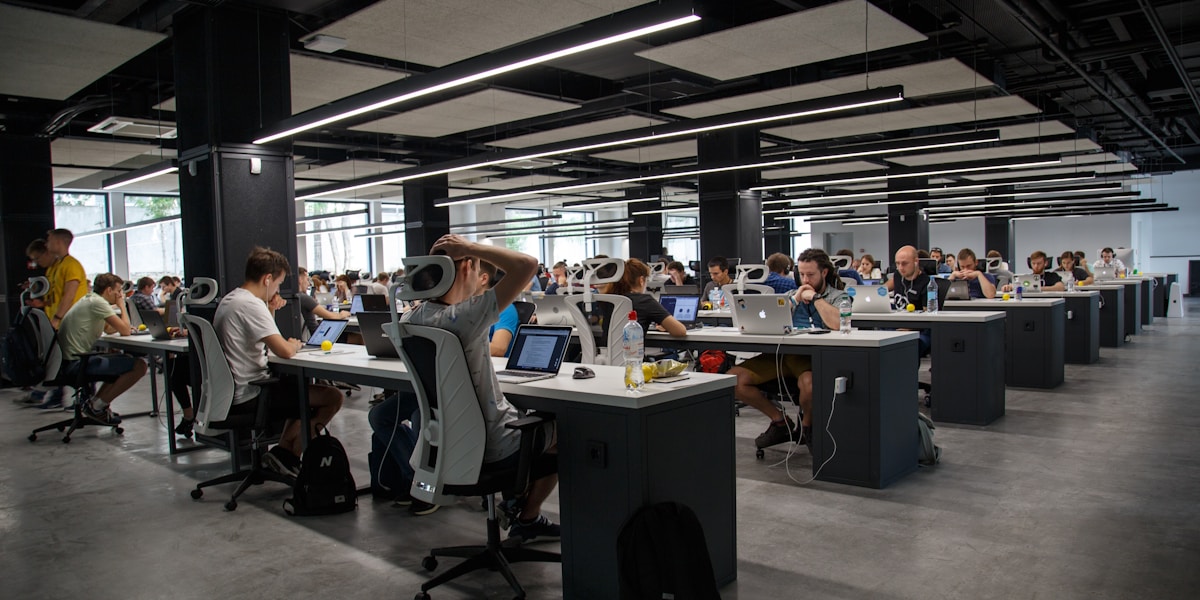
Coworking spaces have already made those investments. At Drowsy Monks, the workspace includes:
- Natural light through large windows, which research consistently links to better focus and reduced fatigue.
- Ergonomic seating that prevents the chronic back and neck pain that plagues professionals in cheap office chairs.
- Dedicated quiet zones for deep work, separate from collaborative areas.
- Meeting rooms and phone booths so conversations do not disrupt the entire floor.
- 24/7 power backup — critical in Patna, where power fluctuations can derail an entire afternoon.
- High-speed internet with sufficient bandwidth for video calls, cloud tools, and simultaneous users.
The productivity argument for coworking is not that it magically makes people work harder. It is that it removes the friction — the broken chair, the unreliable WiFi, the power cut during a client call — that quietly erodes output in under-equipped traditional offices.
Scalability: Growing Without the Growing Pains
Scaling a traditional office is a project. You negotiate a new lease, manage a fit-out, migrate infrastructure, and hope the new space is ready before the old lease expires. For a 10-person team doubling in size, this process can take 3 to 6 months and cost lakhs of rupees.
In coworking, scaling is a conversation. Need two more desks next month? Done. Need a private cabin for your leadership team? Available. Need to downsize after a project wraps? No penalty.
This operational elasticity is one of the most underappreciated advantages of coworking. It converts a capital expenditure problem into an operational line item — and a predictable one at that.
Image and Credibility: The First Impression Problem
There is an uncomfortable truth in Indian business culture: where you meet clients matters. A cramped, poorly maintained office in a back lane sends a signal, regardless of how good your actual work is.
Coworking spaces like Drowsy Monks, located on Bailey Road in Patna's DS Business Park, offer a professional environment for client meetings — reception areas, well-appointed conference cabins, and a polished atmosphere that projects stability and credibility.
For freelancers and early-stage startups that cannot afford a premium standalone office, this is transformative. You get a business address on a main road, a professional meeting room for pitches, and an environment that takes you seriously.
When Traditional Offices Still Make Sense
Intellectual honesty requires acknowledging that coworking is not universally superior. Traditional offices are the better choice when:
- Your team is large (30+ people) and the per-seat cost of coworking exceeds lease costs.
- You need heavy customization — specialized equipment, server rooms, branded interiors, or specific security infrastructure.
- Confidentiality is paramount — legal firms handling sensitive cases, financial institutions with compliance requirements, or R&D teams working on proprietary technology.
- You have stable, predictable headcount and a long-term lease in a favorable location.
- Your company culture requires complete environmental control — specific layouts, sound levels, or access restrictions.
For many established businesses, a traditional office remains the rational choice. The key is making that decision based on your actual needs, not inertia.
When Coworking Is Clearly Better
Coworking wins decisively when:
- You are a startup or small business (1-15 people) testing product-market fit and need to conserve cash.
- Your team is distributed and you need a hub for periodic in-person collaboration.
- You are a freelancer or solopreneur who needs a professional address, reliable infrastructure, and community.
- You are scaling rapidly and cannot predict your space needs six months from now.
- You want to tap into a professional network without attending formal networking events.
- You are entering a new market — like setting up a presence in Patna or Bihar — and want a low-risk way to establish yourself.
The Middle Ground: Managed Offices
There is a third option that blends elements of both: managed offices. These are fully serviced, customizable spaces offered by providers like WeWork, Awfis, and regional operators. You get the flexibility of coworking with the privacy and branding of a traditional office.
The trade-off is cost. Managed offices typically run 2-3x the price of standard coworking, placing them closer to traditional office costs while retaining some flexibility. For teams of 10-20 that need a branded environment without a long-term lease, this can be the sweet spot.
The Bottom Line
The coworking vs. traditional office decision in 2026 is not ideological. It is financial, operational, and cultural. Run the numbers for your specific situation. Include every cost — not just rent, but deposits, fit-out, maintenance, and the opportunity cost of inflexibility.
For most small businesses, freelancers, and growing startups in India's tier-2 and tier-3 cities, coworking offers a combination of cost savings, flexibility, community, and professional infrastructure that a traditional office simply cannot match at the same price point.
The smartest move? Start with coworking. Scale into a traditional office when — and only when — your business genuinely needs one.
Frequently Asked Questions
Is coworking cheaper than a traditional office in Patna?
For teams of 1-15 people, yes — significantly. When you factor in rent, electricity, internet, furniture, maintenance, and security, a traditional office in Patna costs Rs. 40,000-80,000 per month for a basic 5-person setup. The same team on dedicated desks at Drowsy Monks costs Rs. 27,500 per month with all amenities included and no upfront investment.
Can I register my business using a coworking address?
Yes. Drowsy Monks offers a virtual office plan at Rs. 24,000 for 11 months that includes a GST-compliant business address, mail handling, and access to meeting rooms. This is a popular option for startups and freelancers who need a professional business presence without committing to a lease.
What if my team grows beyond the coworking space capacity?
Most coworking spaces, including Drowsy Monks, offer multiple workspace types — from hot desks to dedicated desks to private cabins. As your team grows, you can scale within the same location. If you eventually outgrow coworking entirely, the transition is easier because you have been operating lean and can make a more informed decision about your long-term space needs.
Do coworking spaces have meeting rooms for client presentations?
Yes. Drowsy Monks offers both 4-seater meeting rooms (Rs. 1,200/day) and 9-seater conference cabins (Rs. 3,500/day), both equipped with LED displays, high-speed internet, and air conditioning. Dedicated desk members also receive 5 hours of complimentary meeting room access per month.
Is coworking suitable for teams that need privacy?
Modern coworking spaces are designed with varied work styles in mind. Drowsy Monks includes quiet zones for focused work, phone booths for private calls, and conference cabins for confidential discussions. If your team needs a fully private environment, dedicated desk zones and private cabins offer a middle ground between open coworking and a traditional office.
Related reading: If you are evaluating workspace options, you might also find our guides on how to choose the right workspace, dedicated desks vs flexible desks, and virtual offices explained useful.